
Why a Japa Mala Has 108 Beads: The Meaning Behind the Number
Mar 18, 2025
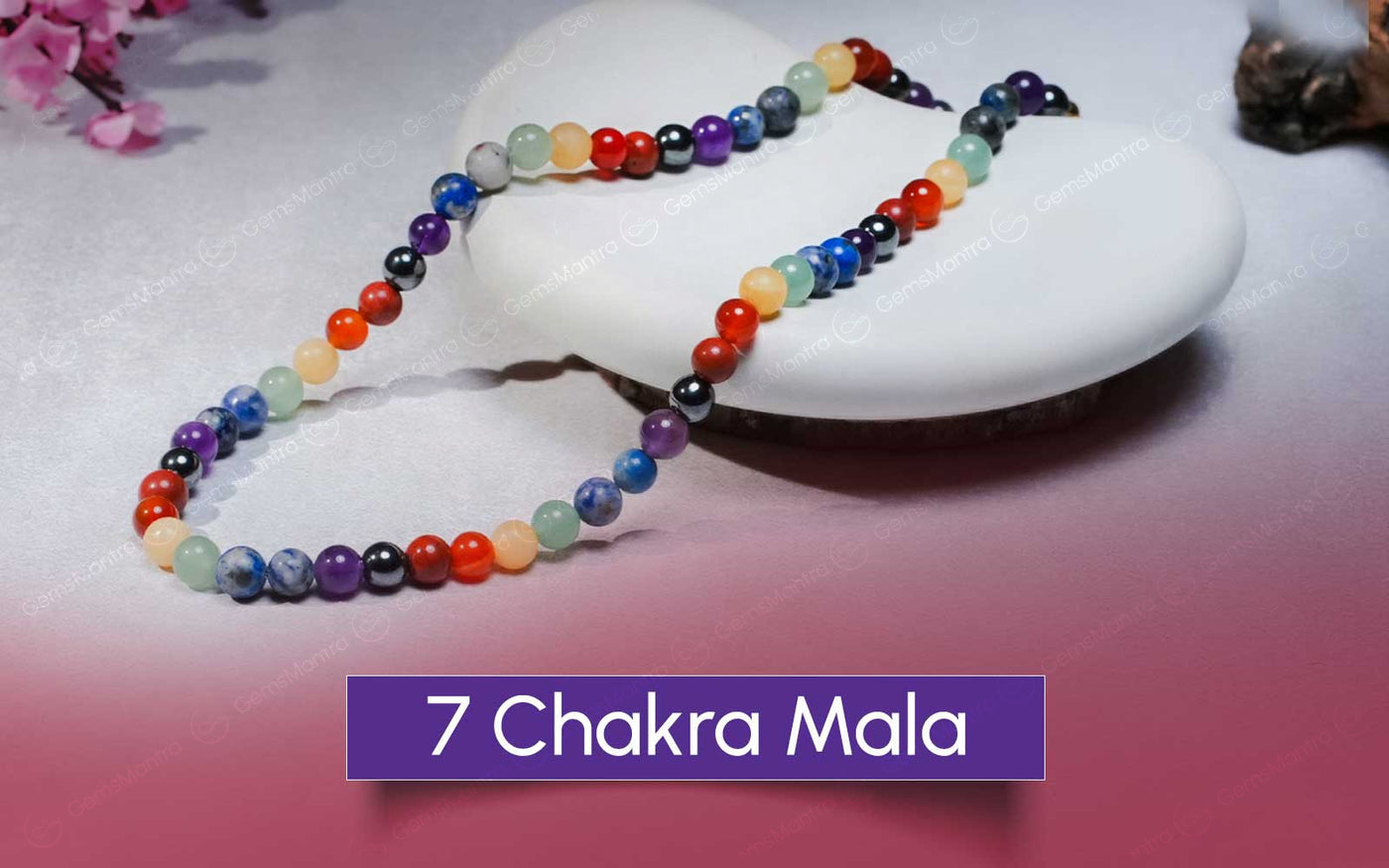
Every traditional japa mala has 108 beads plus one. The number is consistent across Hindu, Buddhist, Jain and Sikh practice, which suggests it predates all of them as separate traditions. There is no single agreed reason - there are several, and they are worth knowing.
The astronomical explanations
The most frequently cited set concerns proportion.
- The distance from the Earth to the Sun is approximately 108 times the Sun's diameter.
- The distance from the Earth to the Moon is approximately 108 times the Moon's diameter.
- The Sun's diameter is approximately 108 times the Earth's diameter.
These are rounded figures that vary through the orbital year, so they are approximations rather than constants. What is notable is that the number was recorded long before the measurements could have been made to modern precision.
The calendrical explanation
There are 12 rashis and 9 grahas in Vedic astrology. 12 × 9 = 108, and a mala can be understood as one full pass through every planetary influence in every sign.
Similarly, the 27 nakshatras each have 4 padas: 27 × 4 = 108. Reciting a mala covers the complete lunar map.
The yogic explanations
- The tradition describes 72,000 nadis in the subtle body, and identifies 108 principal energy lines converging at the heart centre.
- A healthy person is said to take roughly 21,600 breaths in a day - 10,800 during the day and 10,800 at night. 108 is one hundredth of the daytime portion.
- 108 marma points are described in classical Ayurveda.
The linguistic and ritual explanations
- Sanskrit has 54 letters, each with a masculine (Shiva) and feminine (Shakti) aspect: 54 × 2 = 108.
- There are 108 Upanishads in the Muktika canon.
- 108 Divya Desams - the temples of Vishnu praised in the Divya Prabandham.
- In Sanskrit numerology, 1 stands for the singular truth, 0 for emptiness or completeness, and 8 for infinity.
The 109th bead
The extra bead is the guru bead, also called the sumeru or bindu. It is larger than the rest and usually sits where the strand is joined, often finished with a tassel.
Its function is practical as well as symbolic. When you complete a round and reach the guru bead, you do not cross it. You pause, and reverse direction to begin the next round. Crossing over the guru bead is traditionally avoided as a mark of respect to the teacher and the lineage the practice came through - and it also gives you a natural moment to notice you have finished a round.
Shorter malas
Malas of 54 and 27 beads are common and entirely traditional. A 54-bead mala is worked twice for a full round; a 27-bead wrist mala four times. They are used where a full-length mala is impractical - travelling, at a desk, or as a bracelet.
Some Tibetan practitioners use 111 beads on the reasoning that a proportion of repetitions will inevitably be imperfect, so a margin is built in.
Why the count matters in practice
The mala solves a specific problem: counting occupies the mind, and a mind that is counting is not resting in the mantra. By moving the count into the fingers, the mala frees attention completely.
The number is what tradition gave us. The value is that you never have to think about it again.
If you are starting a practice, our guide to how to do japa with a mala covers the mechanics. Browse japa malas.
You May Also Like
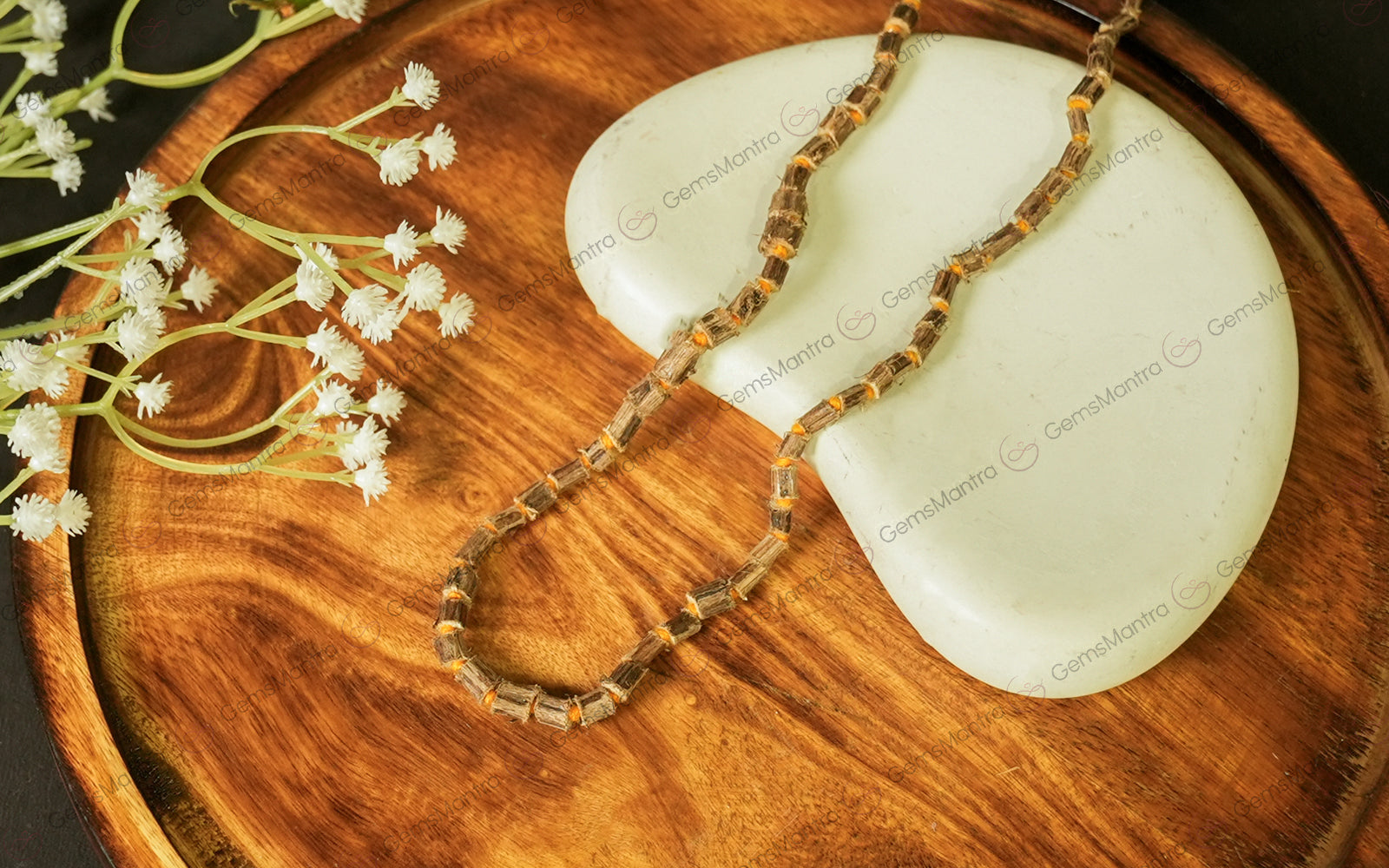
How to Care for Your Mala: Storage, Cleaning and When to Restring
A mala in daily use takes friction at 108 knots. Material-by-material care, the signs a thread is about to fail, and what to do if it breaks mid-practice.
Read Full Article →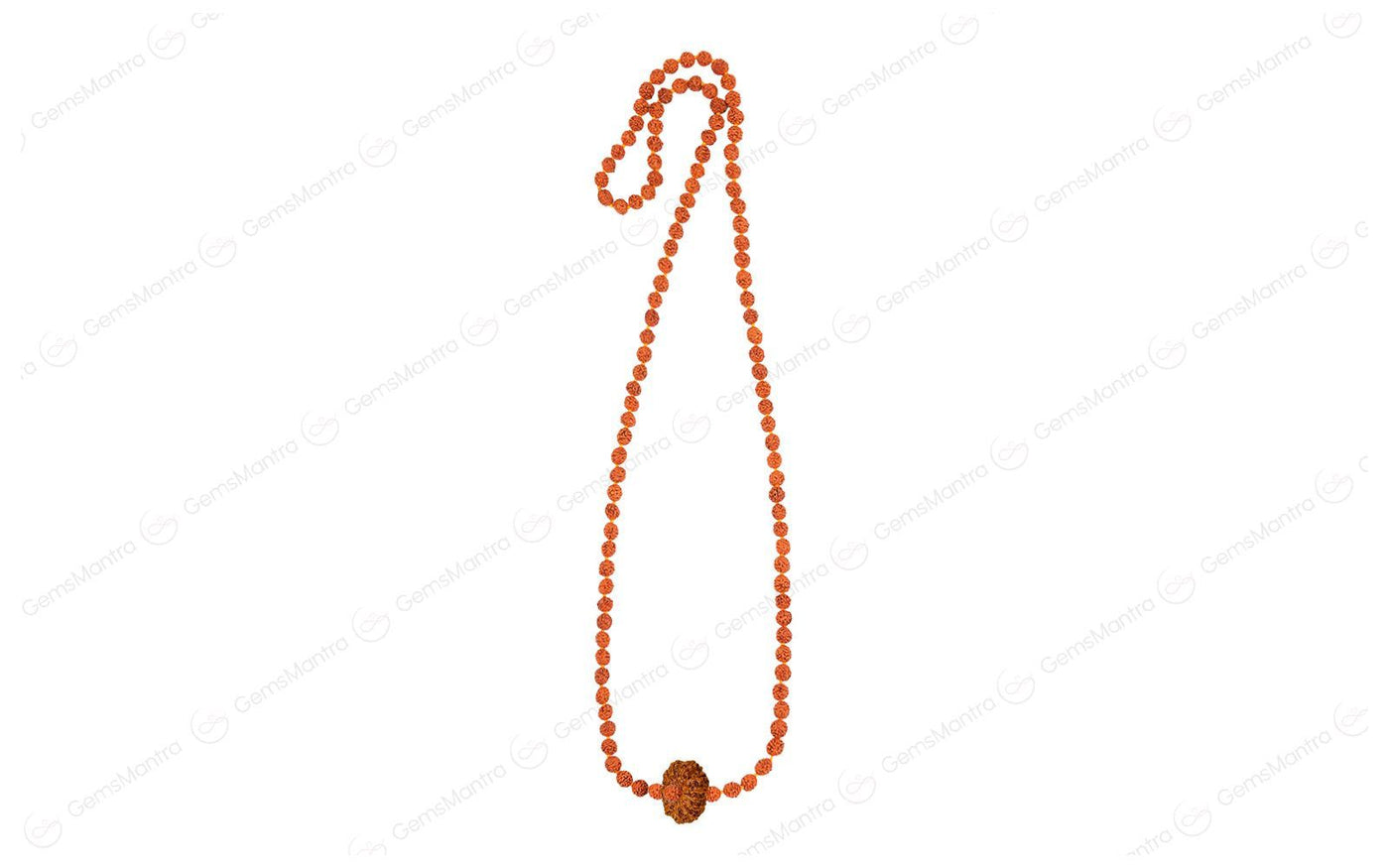
Siddha Mala, Rudra Mala and Indra Mala: What the Names Mean
The three classical Rudraksha mala configurations, what each contains, what they cost, and how to tell a genuine Siddha mala from a marketing label.
Read Full Article →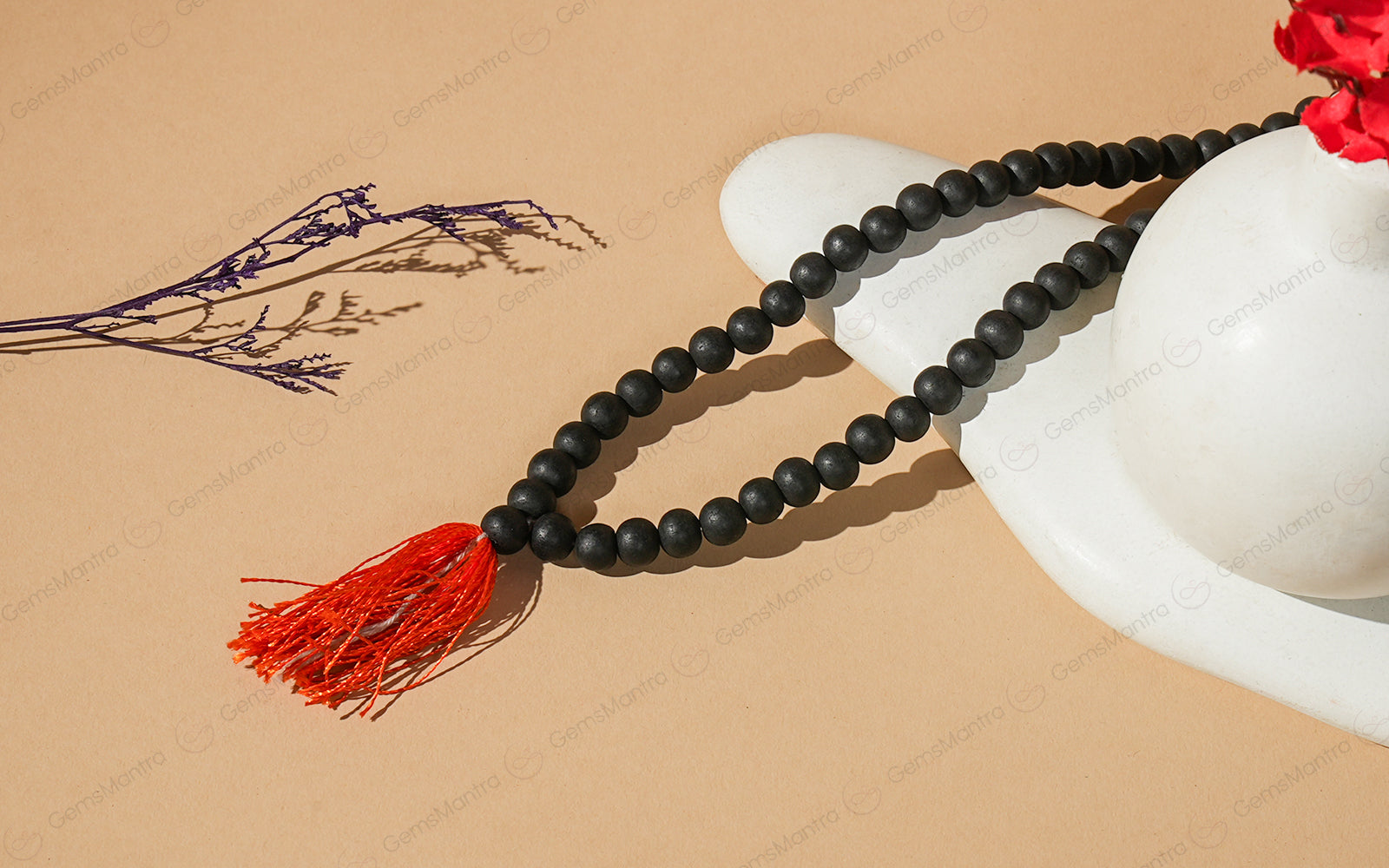
Karungali Mala: The South Indian Tradition of Protection
Karungali is ebony heartwood, worn for protection in Tamil practice. Its tradition, its use, and the water test that separates real ebony from dyed wood.
Read Full Article →0 Comments
Be the first to share your thoughts on this article.
Leave a Comment
Your comment will be reviewed by our team before it appears publicly.