
Tulsi Mala: Significance, Rules and Who Traditionally Wears It
Aug 19, 2025
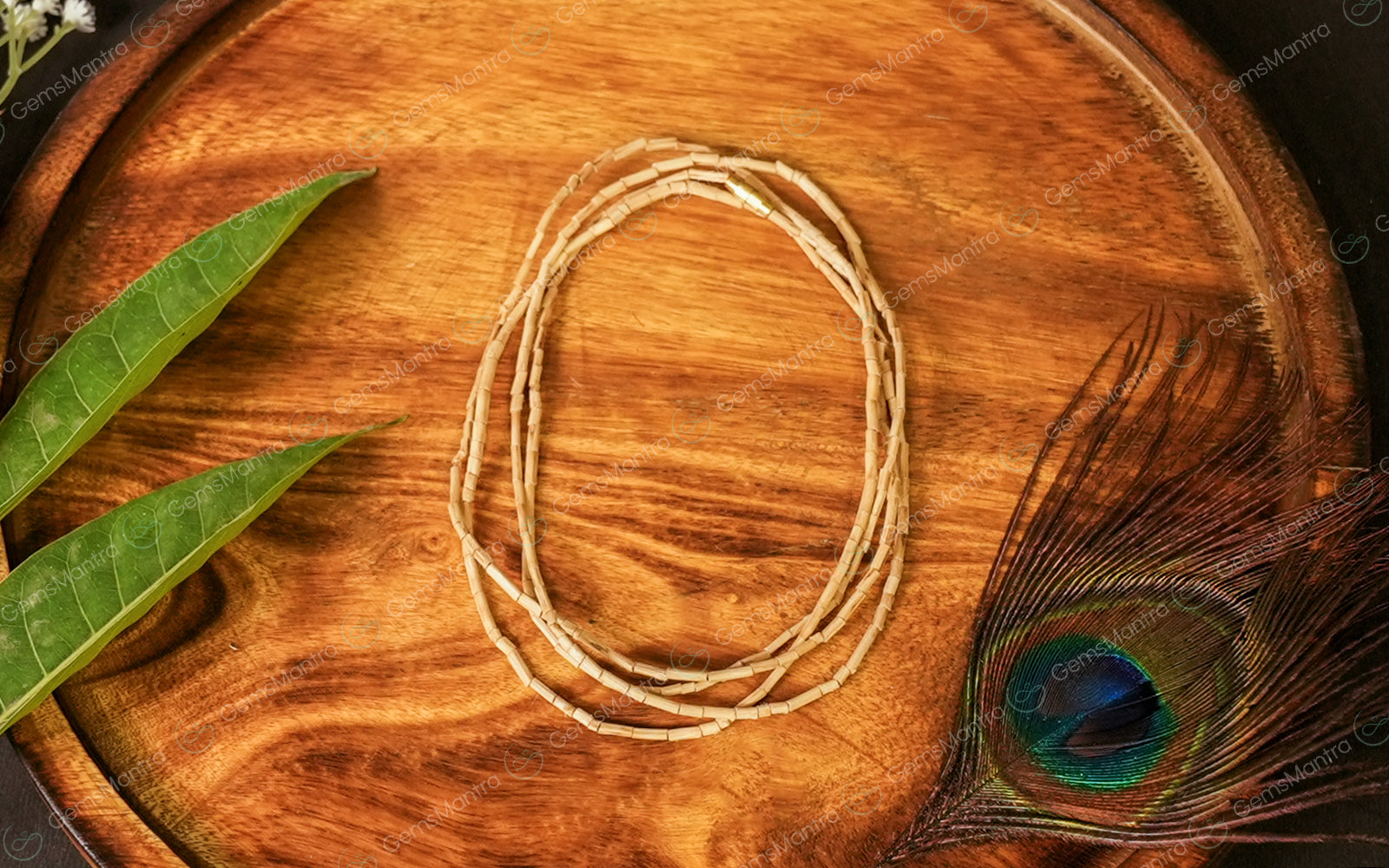
Where Rudraksha belongs to Shiva, tulsi belongs to Vishnu. Tulsi malas are the traditional beads of Vaishnava practice - worn by devotees of Vishnu, Krishna and Ram - and they carry their own set of conventions.
Why tulsi is sacred
Tulsi is holy basil, Ocimum tenuiflorum. In the Puranic account, Vrinda - a devotee of Vishnu - was transformed into the tulsi plant, and Vishnu declared that no offering to him would be complete without a tulsi leaf. This is why tulsi appears in every Vaishnava ritual, why the plant is grown in a dedicated place in traditional households, and why its wood is used for mala beads.
Shyama and Rama tulsi
- Shyama tulsi (Krishna tulsi) - darker wood from the purple-stemmed variety, associated with Krishna. Traditionally considered the more potent of the two.
- Rama tulsi - lighter, cream-coloured wood from the green-stemmed variety, associated with Ram. Gentler in traditional accounts.
Both are genuine. Shyama tends to be more sought after and priced a little higher.
Kanthi mala
A kanthi is a short tulsi mala worn snugly at the throat, usually of two or three strands. In Vaishnava practice it marks initiation and ongoing commitment, and is traditionally worn continuously rather than put on for practice.
The convention that comes with it is straightforward: a kanthi is worn at all times, including while sleeping and bathing. Some lineages allow removing it while eating certain foods, but the general expectation is that it stays on.
Wearing rules
- Do not combine tulsi with Rudraksha on the same strand. Most traditions treat them as belonging to separate streams of practice - Vaishnava and Shaiva - and keep them apart. Wearing them at different times, or in different pieces, is generally accepted.
- Remove it before non-vegetarian food and alcohol. Vaishnava practice is vegetarian, and this is treated as a firm rule rather than a preference.
- Keep it dry. Tulsi is wood and cracks if repeatedly soaked. Take a japa mala off before bathing; a kanthi worn continuously should be dried properly afterwards.
- Do not let it touch the ground.
- Use it for japa of Vaishnava mantras - the Hare Krishna mahamantra, Om Namo Bhagavate Vasudevaya, or the Ram nama.
Who wears it
Anyone drawn to Vaishnava practice - there is no restriction by gender or age. It is commonly given to children in Vaishnava households, and it is the standard mala for anyone taking initiation in ISKCON, Gaudiya and related lineages.
People who work primarily with Shiva generally choose Rudraksha instead. That is a matter of alignment rather than prohibition.
Identifying genuine tulsi
Tulsi is soft, light wood, which makes substitution easy and common.
- Weight. Genuine tulsi is very light. A tulsi mala that feels heavy is another wood.
- Smell. Fresh tulsi wood has a faint, distinctive herbal fragrance, strongest when the beads are newly cut or lightly rubbed.
- Grain. Fine, straight and visible. Dyed hardwood substitutes look flat and uniform.
- Colour. Natural, uneven variation between beads. Perfectly matched colour across 108 beads suggests dye.
- Ageing. Genuine tulsi darkens gradually with wear and handling. Dyed wood fades instead.
Care
Keep it dry and clean it with a dry cloth. If it becomes dull, a very small amount of sandalwood or coconut oil rubbed in and wiped off will restore it. Avoid soap and water. Restring a japa mala roughly once a year. Store it in a cotton pouch in the puja space.
Browse tulsi malas and kanthis, and see how to care for your mala.
You May Also Like
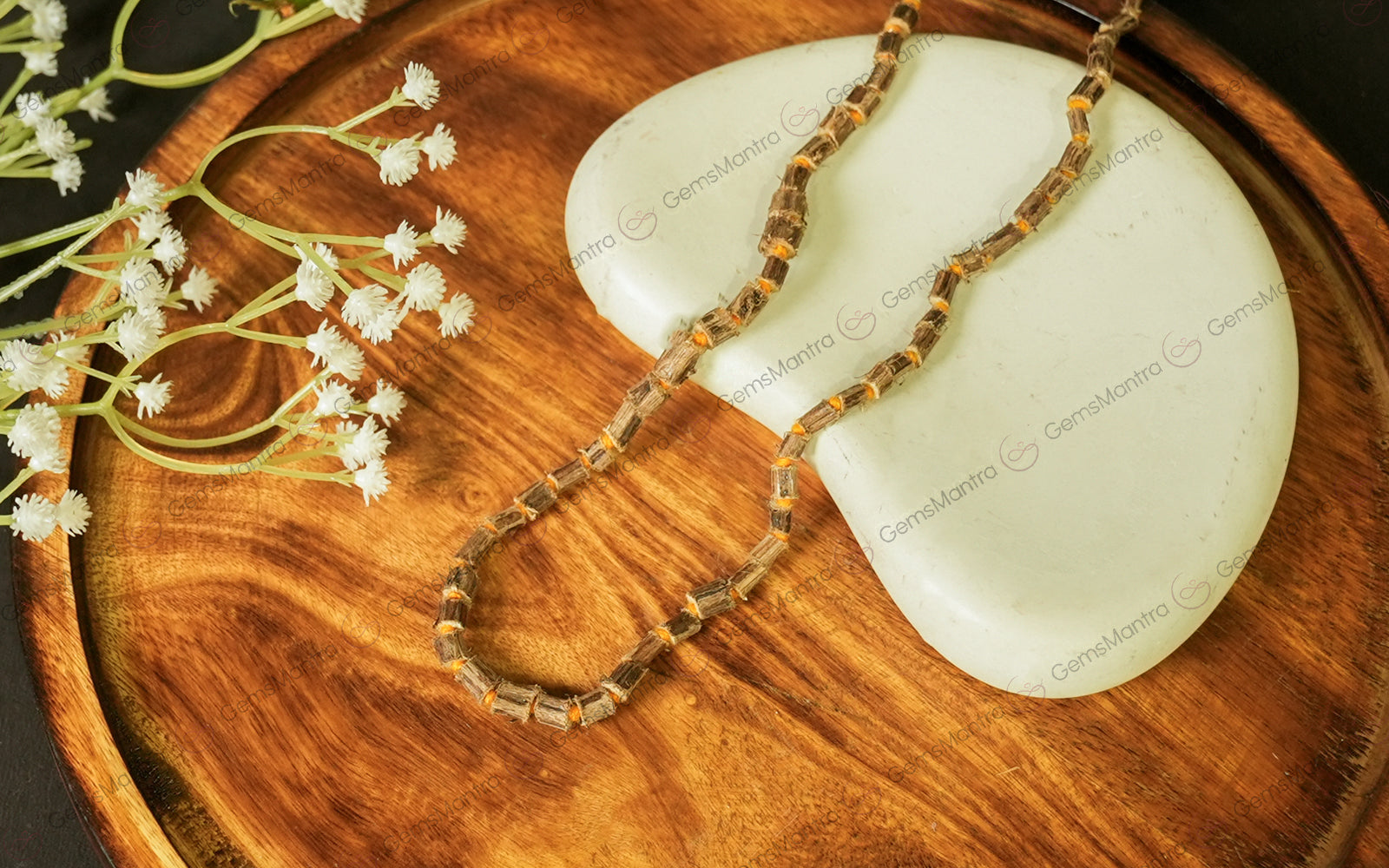
How to Care for Your Mala: Storage, Cleaning and When to Restring
A mala in daily use takes friction at 108 knots. Material-by-material care, the signs a thread is about to fail, and what to do if it breaks mid-practice.
Read Full Article →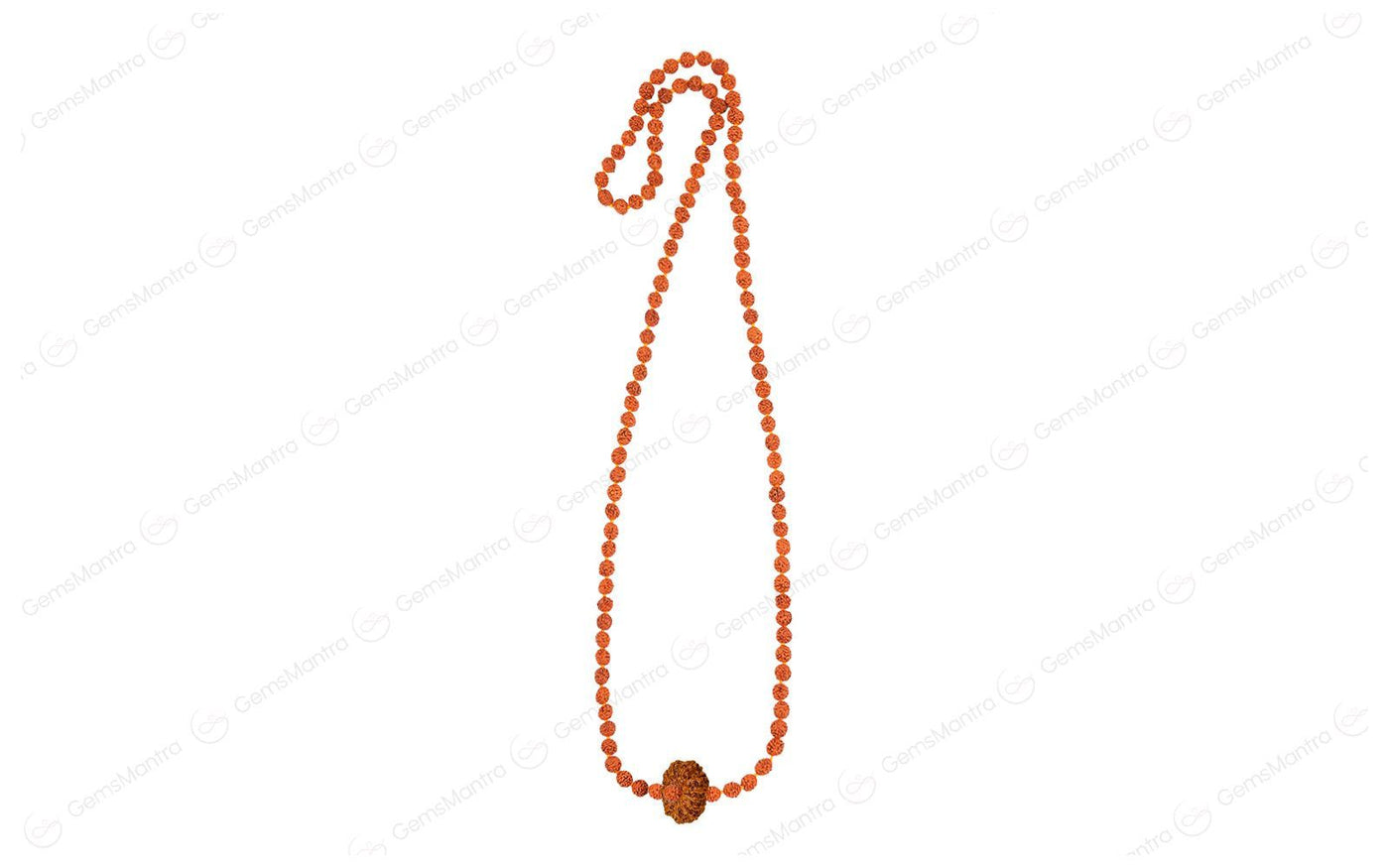
Siddha Mala, Rudra Mala and Indra Mala: What the Names Mean
The three classical Rudraksha mala configurations, what each contains, what they cost, and how to tell a genuine Siddha mala from a marketing label.
Read Full Article →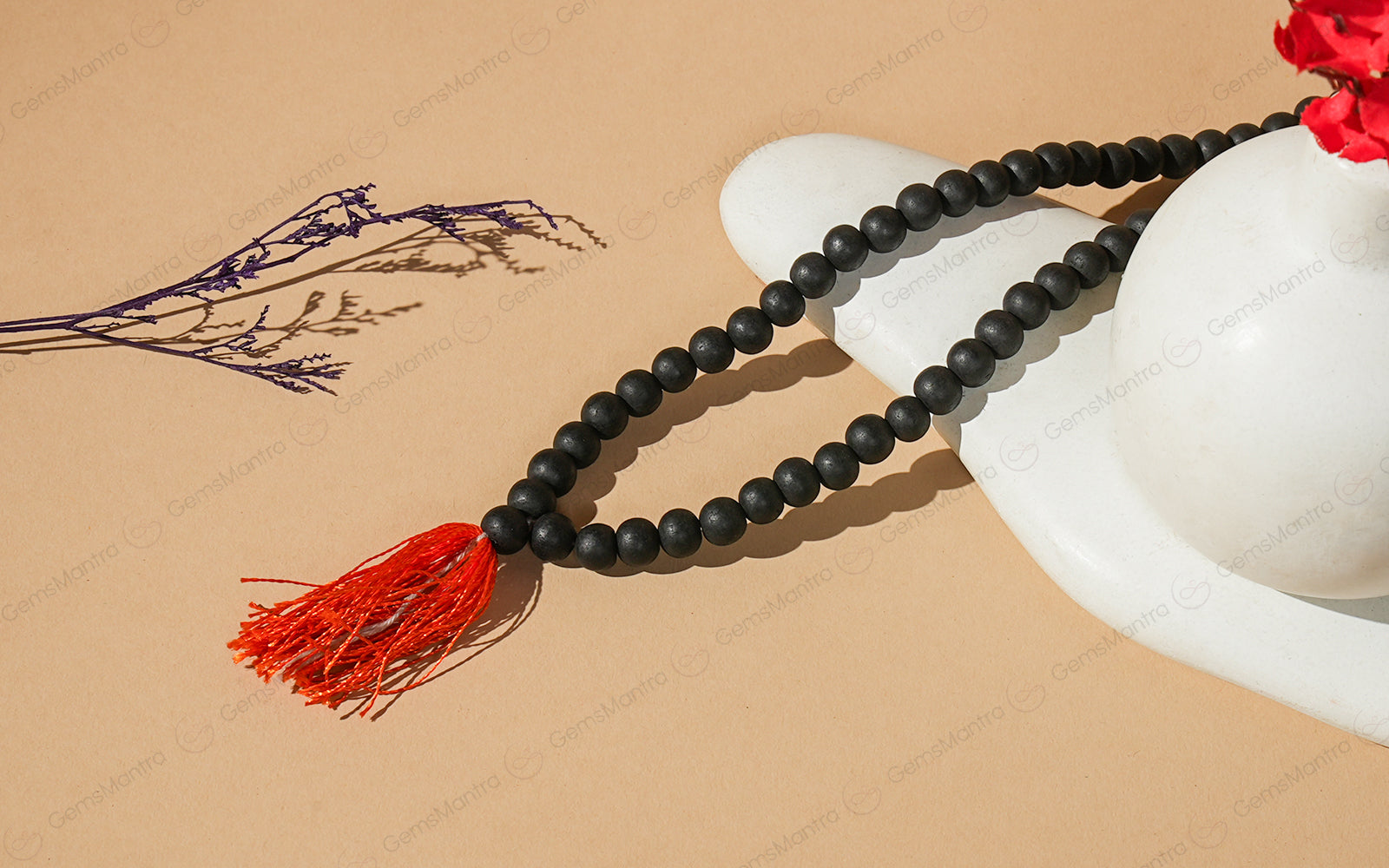
Karungali Mala: The South Indian Tradition of Protection
Karungali is ebony heartwood, worn for protection in Tamil practice. Its tradition, its use, and the water test that separates real ebony from dyed wood.
Read Full Article →0 Comments
Be the first to share your thoughts on this article.
Leave a Comment
Your comment will be reviewed by our team before it appears publicly.