
Abhimantrit and Pran Pratishtha: What "Energised" Really Means
Jul 8, 2025
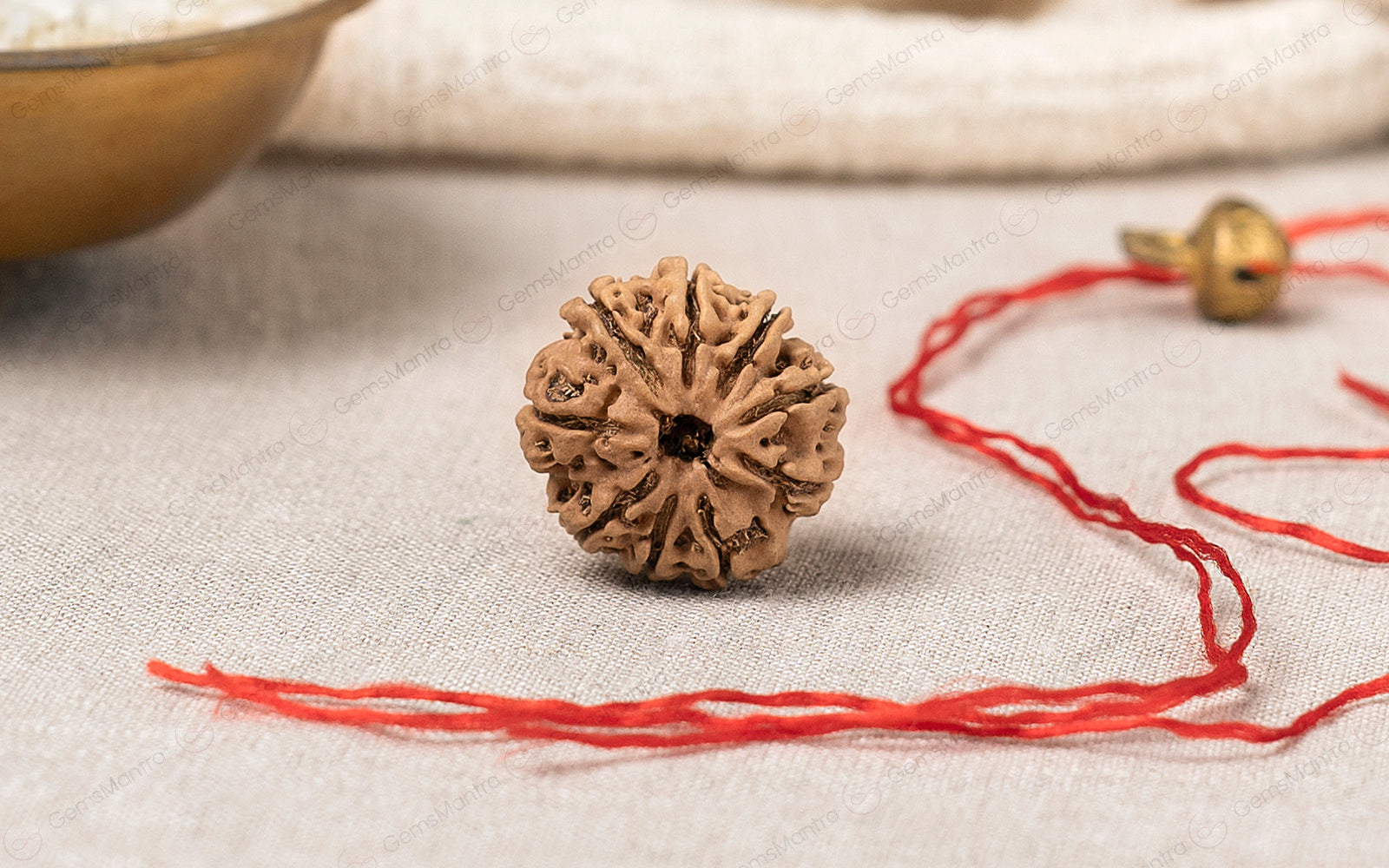
"Energised", "abhimantrit", "siddh", "Reiki charged" - the vocabulary is everywhere in this market, applied to everything, and rarely defined. It is worth knowing what the traditional terms mean, so you can tell when a claim has content behind it.
Abhimantrit
From abhi (towards) and mantrit (invested with mantra). To make something abhimantrit is to charge it by repeated recitation of an appropriate mantra over it.
The process is specific: the item is purified, placed in a prepared space, and the mantra is recited over it a fixed number of times - 108 at minimum, and often a full purashcharana of 125,000 repetitions for serious work. A lamp is kept lit, and the recitation is done by someone who has themselves completed practice in that mantra.
This is the term properly applied to a Rudraksha bead, a gemstone or a mala.
Pran Pratishtha
Literally the establishment of life-breath. This is the more elaborate rite by which a murti or yantra is consecrated - the ceremony that converts an object into an installed presence for worship.
A full pran pratishtha is performed by a qualified priest and involves nyasa (placing mantras in the object), invocation of the deity, offering of the sixteen upacharas, and a homa. It is what is done at a temple installation, and it is the correct term for a yantra rather than a bead.
An object that has undergone pran pratishtha carries obligations: it is understood to require daily worship thereafter. This is why serious practitioners are sometimes reluctant to install a yantra they cannot commit to maintaining.
What to ask a seller
If energisation is being offered as part of what you pay for, these questions are reasonable:
- Which mantra was used? A specific answer is a good sign.
- How many repetitions? 108 is the minimum; more indicates more.
- Who performed it, and what is their practice?
- Was it done individually or for a batch? Batch energisation is common and is not fraud, but it is different from an individual rite and should be described accurately.
- Is there a record? Some sellers photograph or video the process.
The honest position is that energisation is a matter of faith and practice, not of measurement. A seller who claims it can be verified or measured is overstating; a seller who describes exactly what was done is being straightforward.
Doing it yourself
Most traditions hold that energisation performed by the wearer, with sincerity, is at least as effective as anything purchased - and in some lineages more so, because the relationship between practitioner and object is the point.
- Choose an auspicious day - Monday for Shiva-related items, Thursday for Jupiter, Friday for Lakshmi.
- Bathe and wear clean clothes. Clean the space.
- Purify the item: clean water, or panchamrit followed by a rinse. Skip liquids for pearl, coral, emerald and any soft or oiled stone - wipe with a damp cloth instead.
- Place it on a clean cloth before your deity. Light a lamp and incense.
- Offer flowers, and something in the associated colour.
- Hold the item and chant its mantra 108 times. Use a mala to count.
- State your intention plainly.
- Wear or install it immediately afterwards.
A note on Reiki charging
Reiki is a twentieth-century Japanese practice, unrelated to Vedic ritual. "Reiki charged" is not a traditional Indian term and should not be read as equivalent to abhimantrit. It is not a criticism of Reiki to say that the two belong to different systems - only that the labels are sometimes used interchangeably in marketing, and they are not interchangeable.
See Rudraksha wearing rules for the bead-specific sequence, and what is a yantra for installation.
You May Also Like

Camphor, Dhoop and Deepak: The Purpose Behind Everyday Puja Items
Why camphor is burned at the end of an aarti, which oil belongs in the lamp, and what the five elements have to do with the order of a puja.
Read Full Article →
Vastu for Your Puja Room: Direction, Layout and Common Mistakes
Where the mandir should go, which way the idols face, and what to do if you live in a flat with no room to spare. Practical Vastu, not the intimidating kind.
Read Full Article →
Sawan (Shravan) Month: A Practical Guide to Shiva Worship
Why Shravan is the most important month in the Shaiva calendar, what the Monday vrat involves, and how to observe it if you cannot take a day off.
Read Full Article →0 Comments
Be the first to share your thoughts on this article.
Leave a Comment
Your comment will be reviewed by our team before it appears publicly.