
What Is a Yantra? Sacred Geometry in Daily Worship
Feb 18, 2025
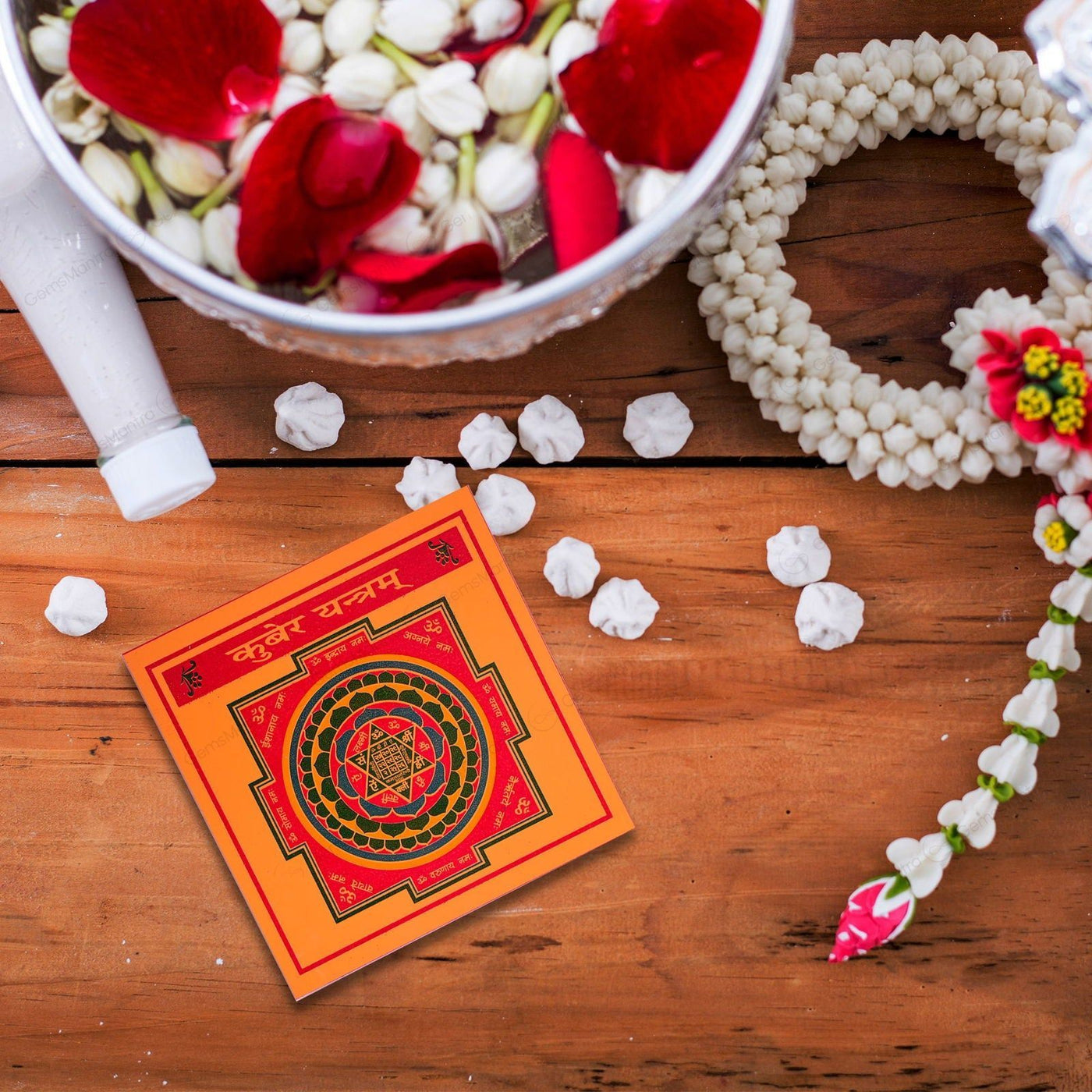
A yantra is a geometric diagram used as an instrument of practice. The Sanskrit root yam means to hold or support, and tra denotes an instrument - so a yantra is literally something that holds. What it holds is attention.
Where a mantra is sound and a murti is form, a yantra is geometry. The three are traditionally treated as different expressions of the same underlying reality, which is why a yantra is usually accompanied by its own mantra.
What the shapes mean
- Bindu - the central point. The origin, the undivided source from which everything else in the diagram unfolds. In practice it is the point the eye finally rests on.
- Upward triangle - Shiva, consciousness, the masculine principle, fire.
- Downward triangle - Shakti, energy, the feminine principle, water.
- Interlocking triangles - the union of the two. The Shri Yantra's nine interlocking triangles are the most elaborate example.
- Circle - cyclical time, completeness, the containing field.
- Lotus petals - unfolding, purity, the layers of manifestation.
- Square (bhupura) - the outer boundary with four gates, representing the material world and the four directions.
Read from the outside in, a yantra moves from the material square through the unfolding lotus to the interlocking triangles and finally to the bindu. That inward movement is the meditation.
The main yantras
- Shri Yantra - the most celebrated. Nine interlocking triangles forming 43 smaller ones. Associated with Lalita Tripurasundari and used for abundance, harmony and spiritual attainment.
- Kuber Yantra - for wealth. Kubera is the treasurer of the gods, and this is the standard yantra of business premises.
- Ganesh Yantra - removal of obstacles, and new undertakings.
- Vastu Purusha Yantra - correcting directional imbalance in a building.
- Navagraha Yantra - the nine planets, used for general astrological balance.
- Mahamrityunjaya Yantra - health and longevity.
- Baglamukhi and Kali Yantras - protection and the overcoming of adversaries.
Material
Copper is the most common and traditionally favoured, valued for conductivity and for the way it ages. Silver, gold, brass and bhojpatra - birch bark, used for yantras that are folded into an amulet - are all traditional. Paper prints are widely available and acceptable for study, though metal is preferred for installation.
Installing one
A yantra is not decorative. Traditional practice treats it as needing installation before it is worshipped.
- Choose an auspicious day - a festival of the associated deity, or a Friday for Lakshmi-related yantras.
- Bathe, and clean the space thoroughly.
- Wash the yantra with clean water, and traditionally with panchamrit, then rinse and dry.
- Place it in the puja space, facing east or north, on a clean cloth.
- Offer incense, a lamp, flowers, and something red - kumkum or a red cloth.
- Chant the associated mantra 108 times. For Kuber Yantra, Om Yakshaya Kuberaya Vaishravanaya Dhanadhanyadipataye Dhanadhanyasamriddhim Me Dehi Dapaya Swaha.
- Establish a routine - a daily lamp, or at minimum a weekly one.
Where a formal pran pratishtha is preferred, that is done by a priest. See what "energised" really means.
Placement rules
- Face it east or north.
- Keep it above floor level, on a clean raised surface.
- Never in a bathroom, a bedroom used for anything but rest, or beneath a staircase.
- Keep it clean and dusted - a neglected yantra is considered worse than none.
- Do not accumulate yantras. One properly maintained is the tradition; a wall of them is not.
See Shri Yantra and Kuber Yantra placement, and browse yantras.
You May Also Like
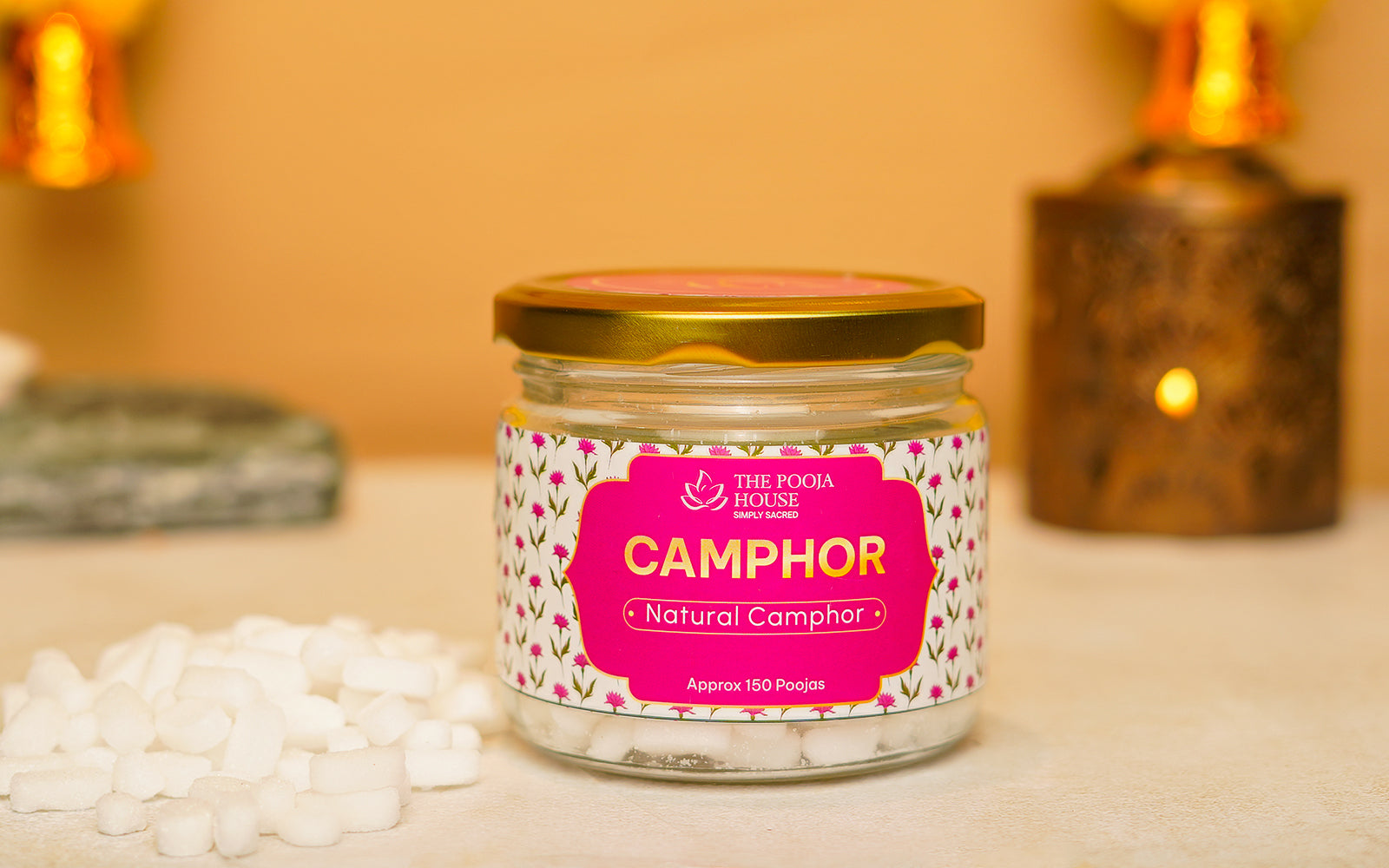
Camphor, Dhoop and Deepak: The Purpose Behind Everyday Puja Items
Why camphor is burned at the end of an aarti, which oil belongs in the lamp, and what the five elements have to do with the order of a puja.
Read Full Article →
Vastu for Your Puja Room: Direction, Layout and Common Mistakes
Where the mandir should go, which way the idols face, and what to do if you live in a flat with no room to spare. Practical Vastu, not the intimidating kind.
Read Full Article →
Sawan (Shravan) Month: A Practical Guide to Shiva Worship
Why Shravan is the most important month in the Shaiva calendar, what the Monday vrat involves, and how to observe it if you cannot take a day off.
Read Full Article →0 Comments
Be the first to share your thoughts on this article.
Leave a Comment
Your comment will be reviewed by our team before it appears publicly.