
Bracelet Sizing, Mala Length and Pendant Fit: Get It Right First Time
Jul 21, 2026
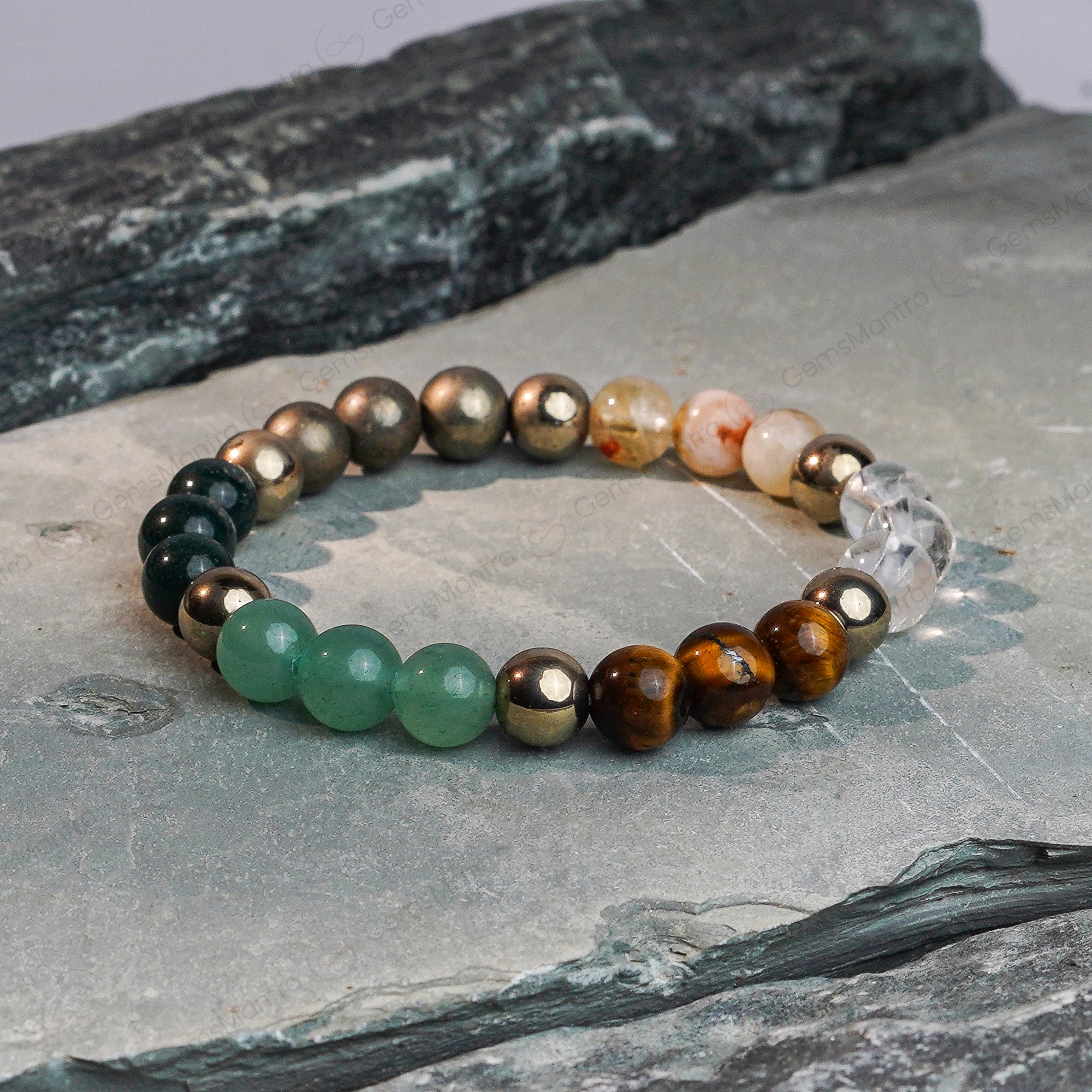
Returns in this category are overwhelmingly about fit, not authenticity. Five minutes with a tape measure prevents nearly all of them.
Measuring your wrist
- Use a flexible tape measure, or a strip of paper you can mark and then measure against a ruler.
- Wrap it around your wrist just below the wrist bone, where a bracelet naturally sits.
- Keep it snug against the skin without compressing it.
- Note the measurement in centimetres.
- Measure the wrist you will actually wear it on - most people's dominant wrist is slightly larger.
Then add for fit:
- Snug fit: wrist + 1.0 cm
- Comfort fit (recommended): wrist + 1.5 to 2.0 cm
- Loose fit: wrist + 2.5 cm
Our bracelet size calculator does this for you, including the bead-size adjustment below.
Bead size changes the fit
This is the part people miss. Larger beads sit further from the wrist, so a large-bead bracelet needs more length than a small-bead one on the same wrist.
| Bead size | Add to wrist measurement | Suits |
|---|---|---|
| 6 mm | +1.0 to 1.5 cm | Children, small wrists, layering |
| 8 mm | +1.5 to 2.0 cm | Most adults - the default |
| 10 mm | +2.0 to 2.5 cm | Larger wrists, a statement piece |
| 12 mm | +2.5 to 3.0 cm | Large wrists only |
Elastic bracelets have some give but not much - size them as above rather than relying on stretch, which shortens their life. Knotted or wired bracelets have none, so measure carefully.
Mala lengths
A 108-bead mala's length is determined by bead size:
- 6 mm beads - roughly 70 cm circumference. Sits at mid-chest; doubles comfortably.
- 8 mm beads - roughly 90 cm. The most common size. Sits below the chest; doubles.
- 10 mm beads - roughly 110 cm. Long; doubles or triples.
- 12 mm beads - roughly 130 cm. Substantial - usually kept for practice rather than worn.
For japa, 6 to 8 mm is easiest under the thumb. Larger beads are slower and heavier over a long session.
Wrist malas: 27 beads at 8 mm wraps twice on most wrists; 54 beads at 6 mm wraps three or four times.
Kanthi malas sit close at the throat - typically 38 to 45 cm. Measure your neck and add 2 to 3 cm.
Pendant chain length
| Chain length | Where it sits |
|---|---|
| 40-42 cm | Base of the throat - choker |
| 45 cm | Just below the collarbone. The most common. |
| 50 cm | Upper chest |
| 55-60 cm | Mid-chest - suits a large Rudraksha pendant |
| 70 cm+ | Below the sternum; can be doubled |
For a single large Nepali Rudraksha - 22 mm and up - choose 55 to 60 cm so the bead hangs clear rather than sitting at the collarbone. For a small capped bead or gemstone pendant, 45 cm is right for most people.
Ring sizing
Measure at the end of the day, when fingers are at their largest. Measure the specific finger the stone will be worn on - the correct finger differs by stone, and our wearing guide lists them. Remember that the setting must be open-backed so the stone touches the skin, which changes how a ring sits compared with a closed-back band.
Common mistakes
- Measuring over clothing or a watch strap.
- Pulling the tape tight. Snug, not compressed.
- Forgetting the bead-size adjustment - the most frequent cause of a bracelet that will not go on.
- Ordering a mala by length rather than bead size. Bead size determines both length and feel in practice.
- Choosing a heavy pendant for daily wear. A 30 mm bead is a serious weight around the neck all day.
- Sizing a child's piece to fit now. Allow room, and check the fit every few months.
Use the bracelet size calculator, and browse bracelets and malas.
You May Also Like
Rudraksha and Gemstone Gifting Guide: What to Give and When
Spiritual items make thoughtful gifts and awkward ones. Which pieces are safe to give without knowing someone's chart, and which you should never choose for another person.
Read Full Article →
8 Red Flags When Buying Rudraksha and Gemstones Online
You cannot hold the item before it arrives, so the checks have to move to the seller. Eight warning signs, and the questions that expose them quickly.
Read Full Article →
Why Rudraksha Prices Vary So Much: A Transparent Breakdown
The same mukhi can cost a few hundred rupees or several lakh. Here is exactly what drives the difference, and where in the range you should actually be shopping.
Read Full Article →0 Comments
Be the first to share your thoughts on this article.
Leave a Comment
Your comment will be reviewed by our team before it appears publicly.