
Amethyst: The Calming Crystal for Sleep, Anxiety and the Third Eye
Feb 4, 2025
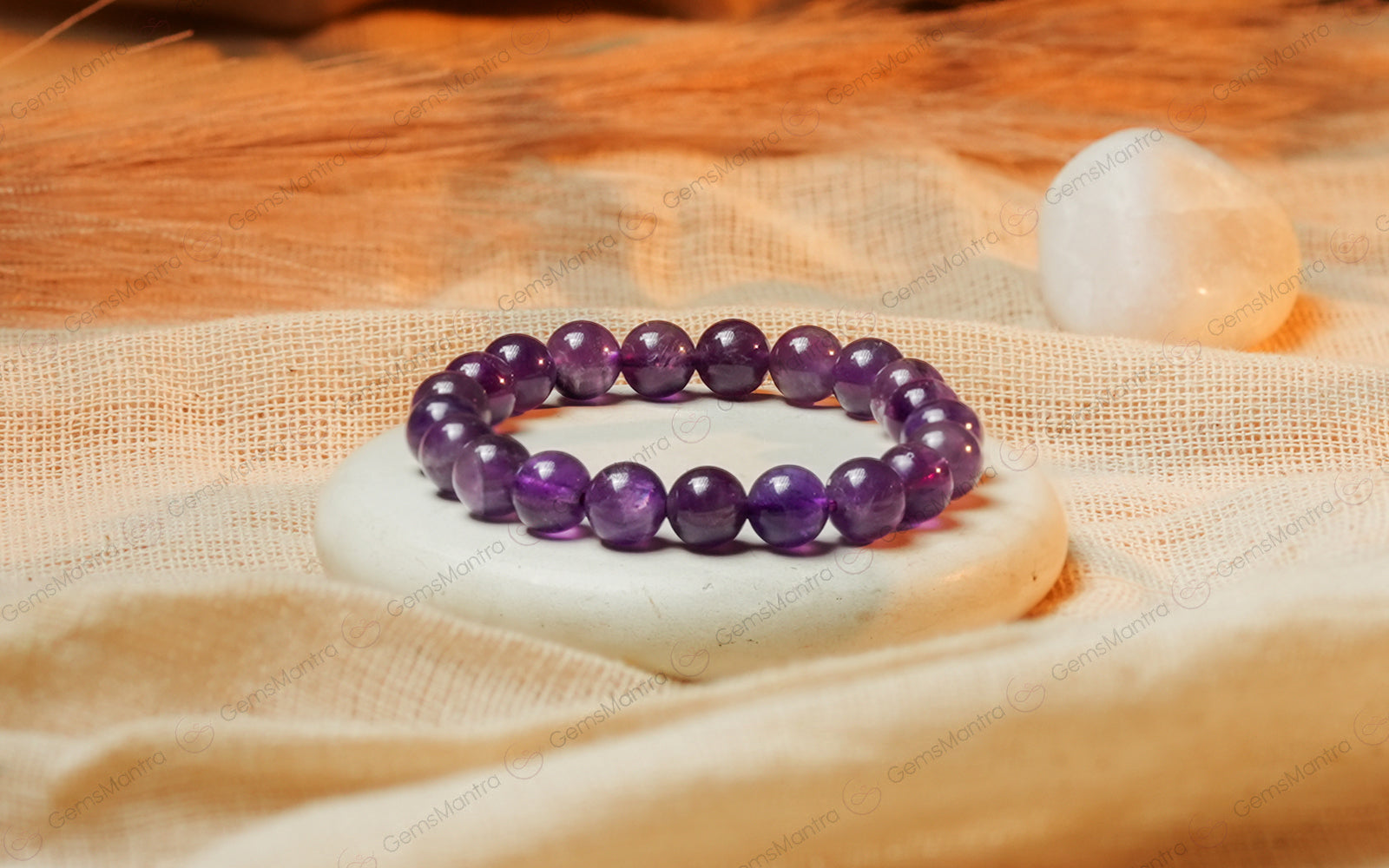
Amethyst is purple quartz, coloured by trace iron and natural irradiation, and it is the crystal people ask for most often. Unlike much of this category, its traditional use is narrow and specific, which makes it easy to work with sensibly.
What it is used for
- Sleep. The most common reason people buy it - kept under a pillow or on a bedside table.
- Anxiety and overthinking. Associated with settling a mind that will not stop turning.
- Meditation. Linked to the third eye and crown chakras, and traditionally held during practice.
- Emotional regulation. Associated with steadiness in grief and in periods of change.
- Sobriety. The Greek name means "not intoxicated" - the oldest recorded use of the stone.
To be plain about it: these are traditional associations and reported experiences, not clinical claims. Amethyst supports rest and practice; it is not a treatment for insomnia or an anxiety disorder.
How to actually use it
- Bedside or under the pillow. A tumbled stone or small cluster. The simplest and most common approach.
- Worn as a bracelet. Left wrist is the conventional choice for receiving, right for projecting. Choose whichever you will keep on.
- Held in meditation. In the left palm, or resting at the brow.
- As a cluster or geode in a room. Bedroom or meditation space, not a busy hallway.
- As a crystal tree or sphere. Decorative, and a useful visual anchor for a practice space.
Consistency matters more than quantity. One stone kept beside you nightly does more than a shelf of crystals you never touch.
Colour, quality and what changes it
Amethyst ranges from pale lilac to deep royal purple. Deep, evenly saturated colour with good transparency is most valued; the Siberian grade - deep purple with red and blue flashes - is the traditional benchmark. Uruguayan and Brazilian material dominates the market, and Brazilian geodes are the large clusters you see most often.
Three things to know about treatment:
- Heat treatment turns amethyst yellow-orange. Most commercial "citrine" is heat-treated amethyst, which is why the two so often come from the same mine.
- Dyed quartz is sold as amethyst at low prices. Look for colour concentrated in cracks, an unnaturally uniform tone, and colour that rubs off with acetone on a discreet spot.
- Synthetic amethyst is grown commercially and is difficult to distinguish by eye. It is common in cheap faceted stones and rare in raw clusters and tumbles.
Natural amethyst is almost always colour-zoned - lighter towards the base of a point, deeper at the tip. Perfectly even colour throughout a large piece deserves a second look.
Care
- Keep it out of direct sunlight. Amethyst fades - this is the one care instruction that genuinely matters. A window sill will bleach a good specimen within months.
- Clean with lukewarm water and a soft cloth. Quartz is hard at 7 and tolerates handling well.
- Cleanse it periodically - moonlight, sound, or a few hours on a bed of salt (not in salt water, which can etch and loosen matrix). See how to cleanse and charge crystals.
What pairs well with it
- Clear quartz - the conventional amplifier.
- Rose quartz - amethyst for calm, rose quartz for warmth. A common bedside pair.
- 7 Mukhi Rudraksha - a frequently requested combination bracelet in our range.
- Green aventurine - calm paired with steadiness, often chosen for exam periods.
Browse amethyst bracelets or explore crystals and gemstones.
You May Also Like
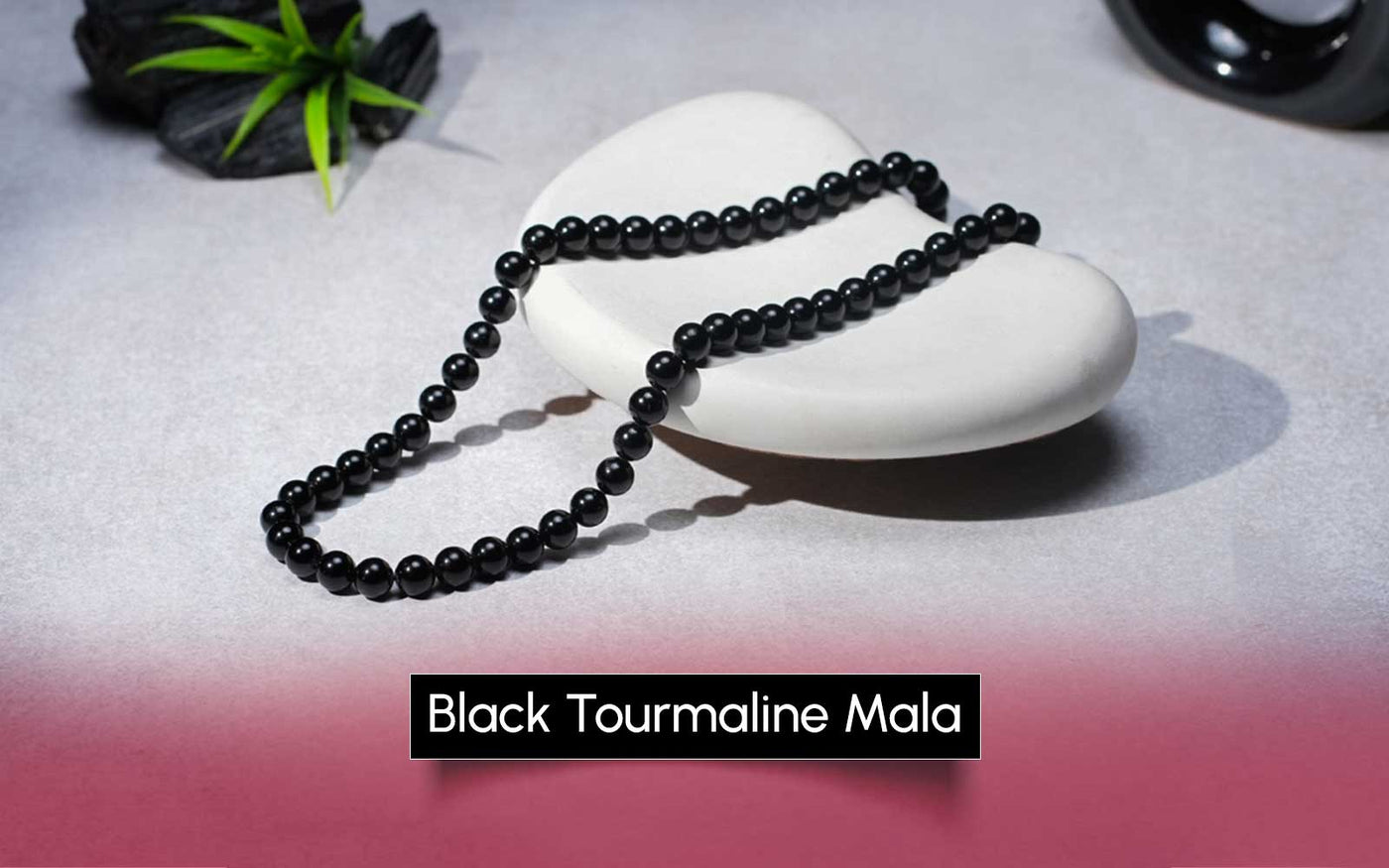
Black Tourmaline, Obsidian and Karungali: A Guide to Protection Stones
Three of the best-known protective materials, what distinguishes them, and how to use them at an entrance, in a workspace or on the body.
Read Full Article →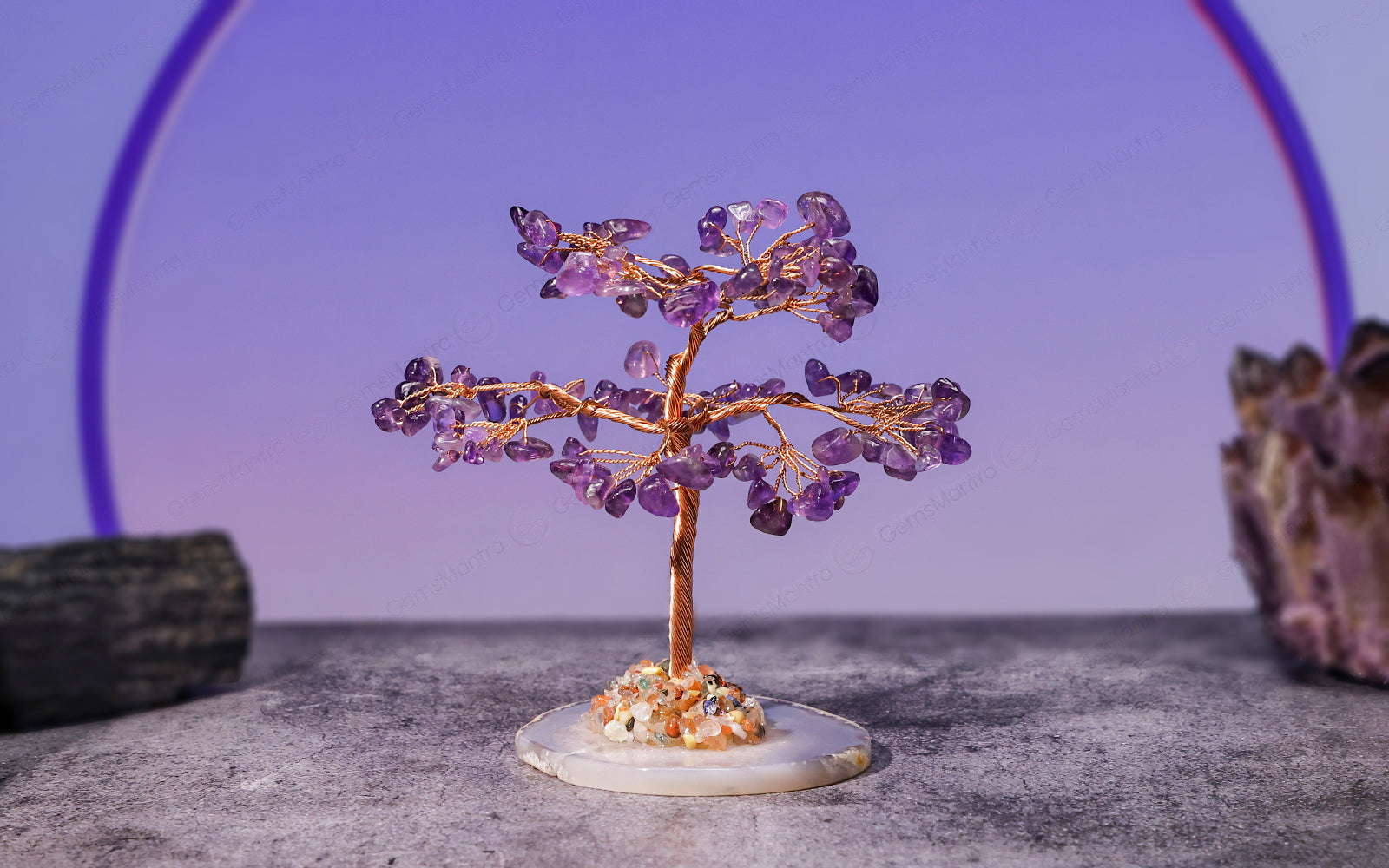
Crystal Trees, Spheres and Pyramids: What Each Shape Is For
The form a crystal is cut into changes how it is traditionally used. A guide to trees, spheres, pyramids, points and raw clusters - and where to place each.
Read Full Article →
How to Cleanse and Charge Crystals: 6 Methods and When to Use Each
Salt water will ruin some crystals and sunlight will fade others. A method-by-method guide, including which stones must never meet water.
Read Full Article →0 Comments
Be the first to share your thoughts on this article.
Leave a Comment
Your comment will be reviewed by our team before it appears publicly.