
How to Read a Gemstone Lab Certificate: Every Field Explained
Apr 15, 2025
Most buyers glance at a certificate, see an official-looking layout, and file it away. The certificate is where a seller's claims become checkable - but only if you know which lines matter.
The fields, in order
Report number and date
The identifier you use to verify the report with the issuing laboratory. Note the date: a report more than a few years old may predate treatments the lab can now detect.
Species and variety
This is the most important line on the page. Species is the mineral - corundum, beryl, quartz. Variety is the specific stone - sapphire, emerald, amethyst.
It is what tells you whether your "Pukhraj" is corundum (yellow sapphire) or quartz (citrine sold as a substitute). If this line does not match what you were told you were buying, nothing else on the page matters.
Weight
Always in carats on a laboratory report. Convert to ratti yourself - multiply by 1.0989 - and compare with what you ordered. See carat vs ratti.
Dimensions and shape
Length × width × depth in millimetres, with cut and shape. Useful for confirming that the stone you received is the stone that was certified - measure it.
Colour
Descriptive rather than graded on most Indian reports. Some laboratories add a grade or a comparison to a master set.
Comments and treatment
The line that determines value, and the one most often left vague. Learn this vocabulary:
- "No indications of heating" or "unheated" - the premium designation.
- "Indications of heating" or "heat treated" - standard, widely accepted, lower price.
- "Clarity enhanced" - something was introduced into fractures. Ask what.
- "Minor / moderate / significant residue" - the oiling grade for emerald. Significant is a large reduction in value.
- "Lead glass filled" - common in cheap ruby. Fragile, low value, unsuitable for astrological use.
- "Diffusion treated" - colour added at the surface only. Avoid.
- "Dyed" - common in coral, turquoise and low-grade quartz.
- "Synthetic" / "lab-grown" / "created" - not natural, regardless of being chemically identical.
- "Assembled" / "doublet" / "triplet" - more than one piece bonded together.
A report with a blank or missing treatment field is not a clean report. It means the question was not asked. Ask for one that answers it.
Origin
Geographic origin - Ceylon, Burma, Colombia - is offered by some laboratories and carries a significant price premium. It is a probabilistic determination based on inclusion and trace-element analysis, not a certainty, and it matters far more to collectors than to astrological use.
Verifying the report itself
Fake certificates are common, and easy to produce.
- Check the report number on the laboratory's own website, typing the URL yourself rather than following a link the seller provided.
- Confirm the laboratory exists and has a verifiable address and history.
- Look for security features - hologram, QR code, watermark, microprint.
- Match the stone to the certificate. Measure the dimensions and check the photograph.
- Be sceptical of in-house certificates from the seller's own "laboratory". They are not independent verification.
- Prefer recognised laboratories - GIA, IGI, GRS, Gübelin and SSEF internationally; GII, GJEPC-recognised labs and IGI India domestically.
Rudraksha certificates are different
For a bead, look for X-ray or CT imaging showing the internal compartments, a stated mukhi count, a stated origin (Nepal or Indonesia), and a measured diameter. The X-ray is the meaningful part - it is what distinguishes a natural bead from one with carved lines.
Red flags
- A certificate that describes the stone only in vague terms with no species line.
- A report number that cannot be verified online.
- A certificate for a different weight or dimension than the stone you hold.
- Grand language - "premium quality", "highly effective" - which no real laboratory uses. Labs report facts, not efficacy.
- A seller who resists a request for an independent report.
Certificates issued with our products can be checked on the certificate validation page. Browse certified gemstones.
You May Also Like
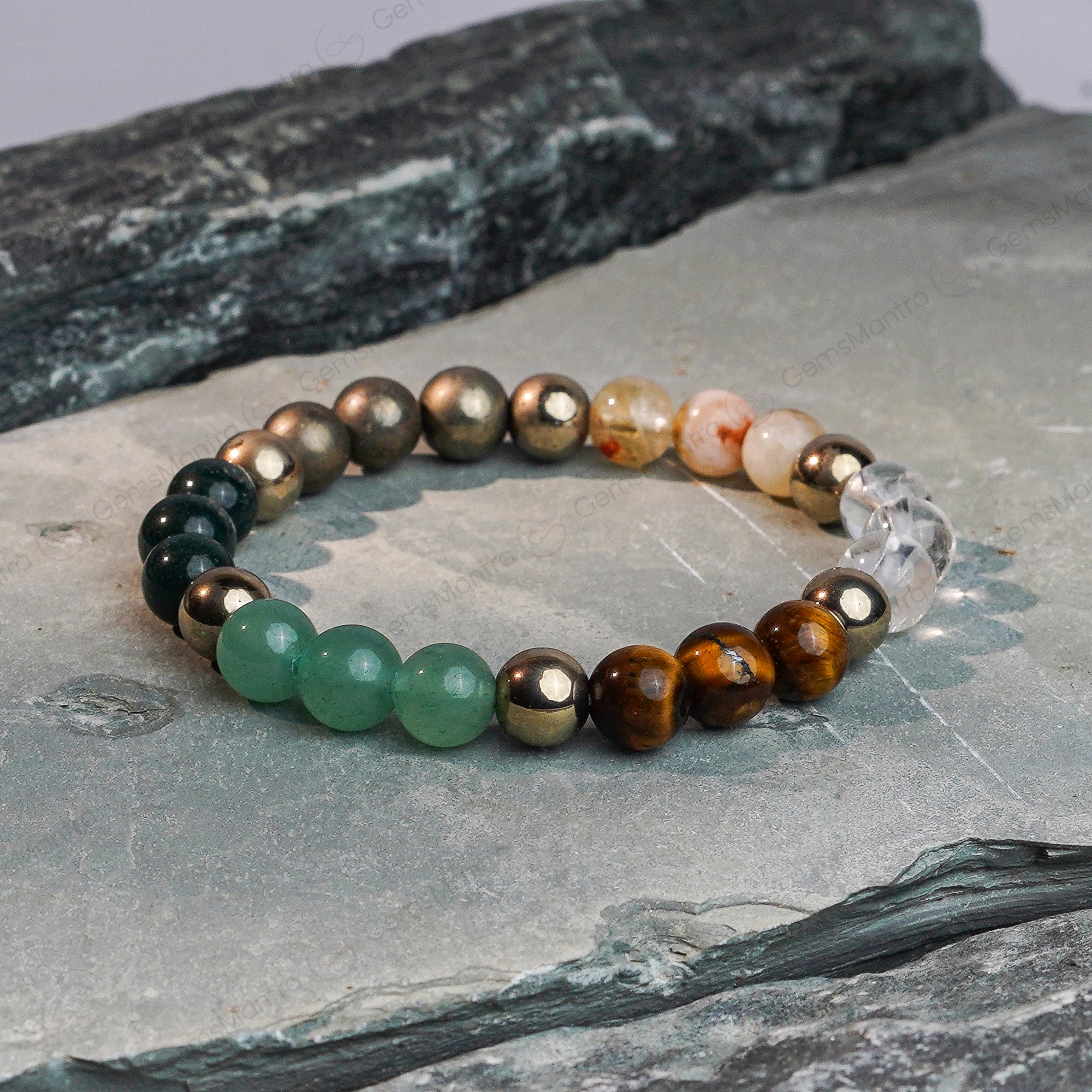
Bracelet Sizing, Mala Length and Pendant Fit: Get It Right First Time
How to measure your wrist properly, how bead size changes the fit, what mala lengths actually mean, and how to pick a pendant chain that sits where you want it.
Read Full Article →
Rudraksha and Gemstone Gifting Guide: What to Give and When
Spiritual items make thoughtful gifts and awkward ones. Which pieces are safe to give without knowing someone's chart, and which you should never choose for another person.
Read Full Article →
8 Red Flags When Buying Rudraksha and Gemstones Online
You cannot hold the item before it arrives, so the checks have to move to the seller. Eight warning signs, and the questions that expose them quickly.
Read Full Article →0 Comments
Be the first to share your thoughts on this article.
Leave a Comment
Your comment will be reviewed by our team before it appears publicly.